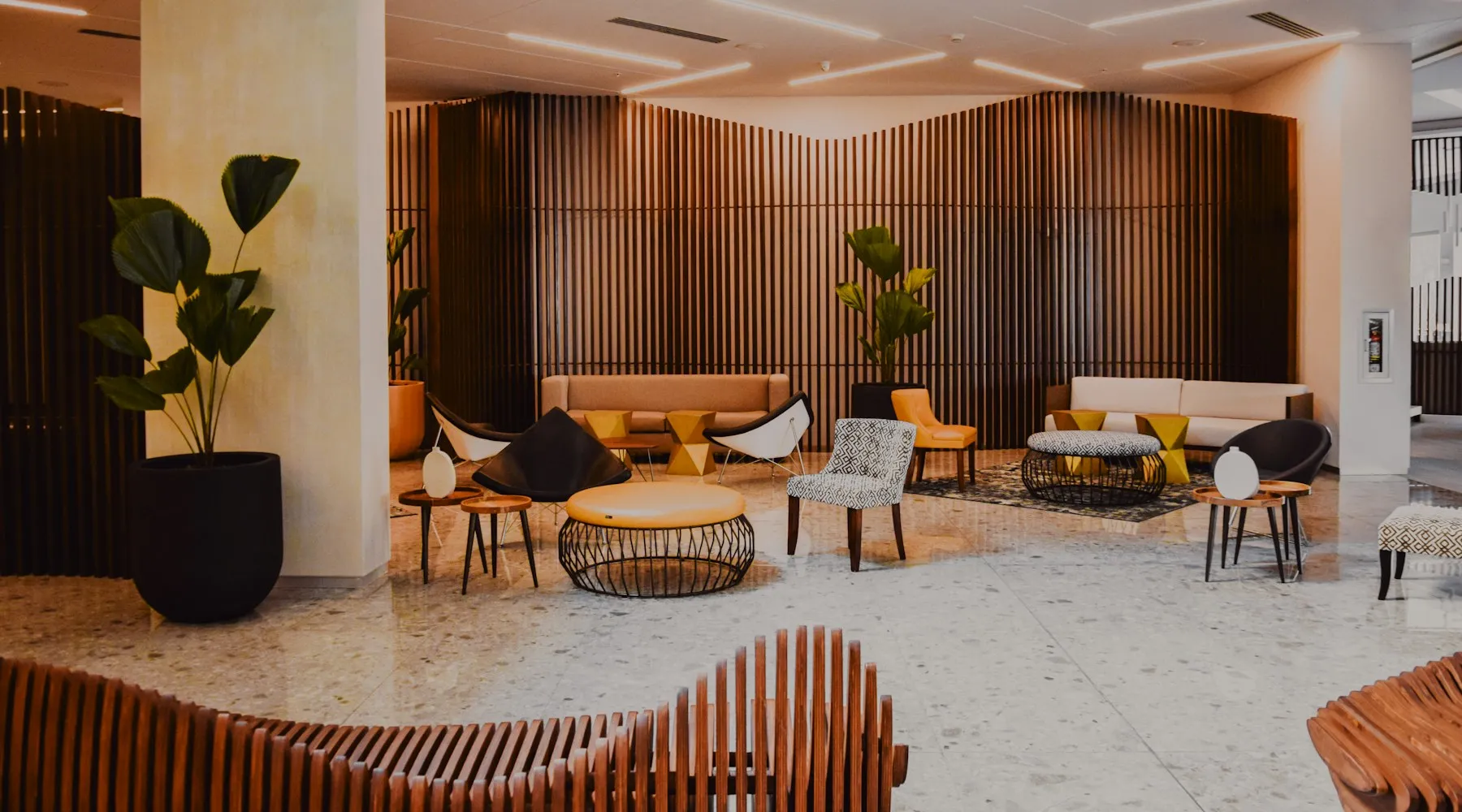
Art Deco style: transform your interior
Art Deco commits to geometry and luxury: deep velvet, brass, veined marble, fan motifs and symmetrical curves. The palette runs dark and saturated — emerald green, midnight blue, burgundy — lifted with gold. It demands symmetry and a room large enough to carry it.
Drag to compare
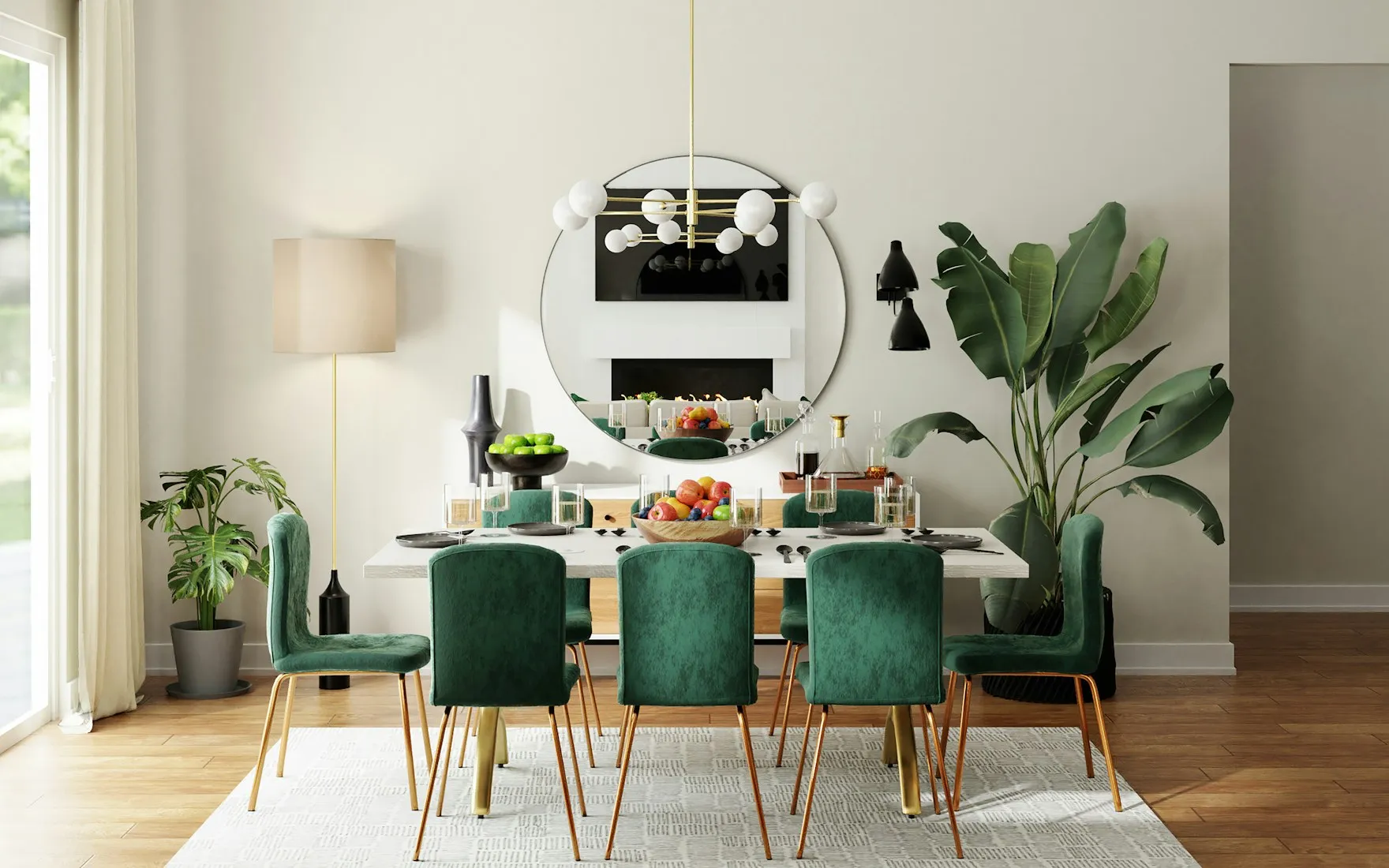
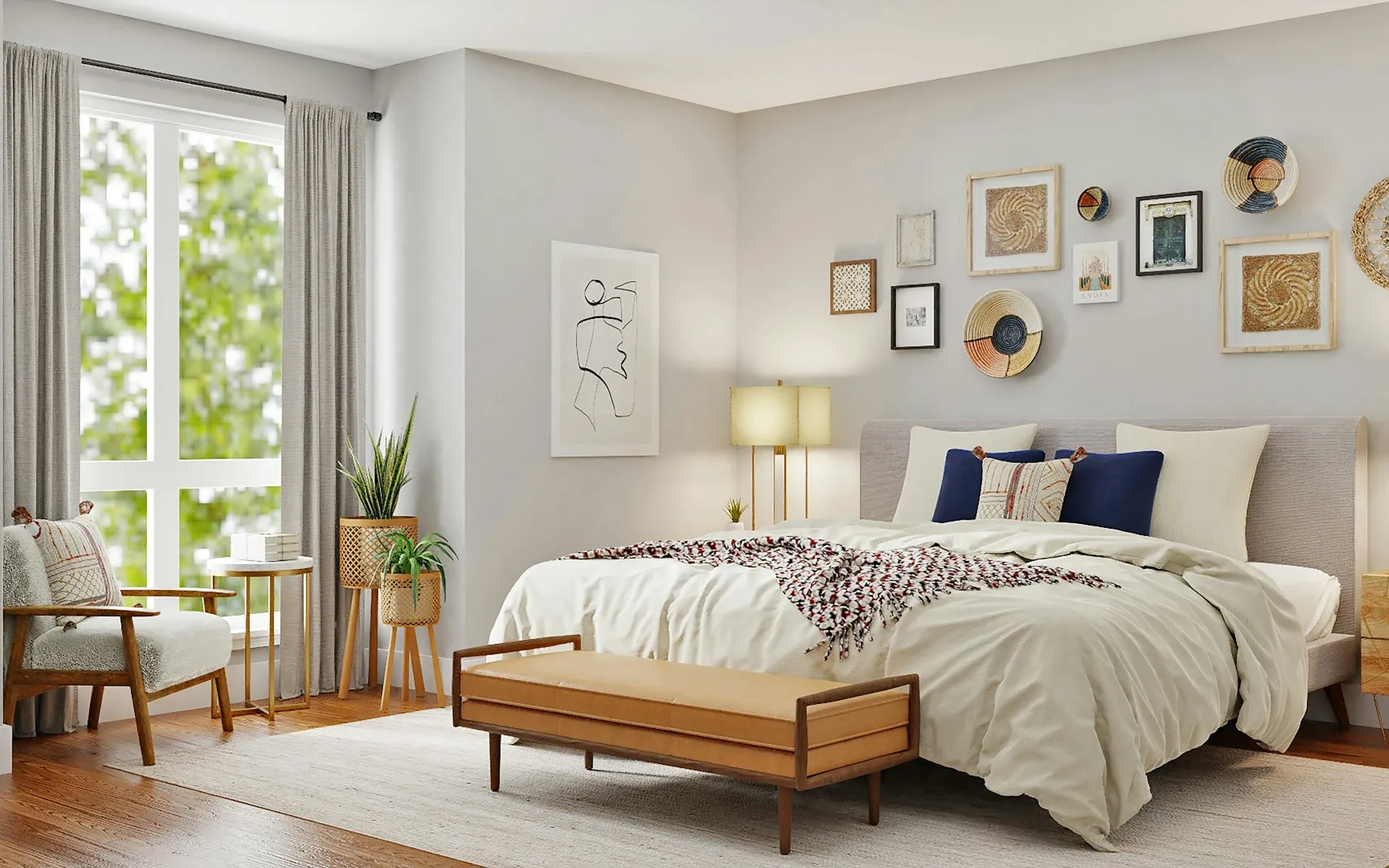
An ordinary room, then the same volume treated in art deco style.
Understanding art deco style
Art Deco is the most theatrical style on this list and the riskiest. It rests on three things: strict symmetry, one repeated reflective metal (brass or gilt brass, never mixed with chrome), and a saturated dark colour across a large surface. A midnight-blue wall behind an upholstered headboard works; the same blue scattered in small touches does not. It wants ceiling height and a materials budget, because faux marble and thin gilding read as fake immediately. It excels in rooms used in the evening — dining room, bedroom, formal living room — and suits workspaces poorly, where the contrast tires the eye.
The mistake to avoid
Mixing brass and chrome. Pick one metal and hold it across the whole room.
This style, room by room
Frequently asked questions
What is art deco style?
Art Deco commits to geometry and luxury: deep velvet, brass, veined marble, fan motifs and symmetrical curves. The palette runs dark and saturated — emerald green, midnight blue, burgundy — lifted with gold. It demands symmetry and a room large enough to carry it.
What palette suits a art deco interior?
Emerald green, midnight blue, burgundy, black, gilt brass
What mistake should I avoid with art deco style?
Mixing brass and chrome. Pick one metal and hold it across the whole room.
Close combinations
Updated 2026-08-21